What to learn from what is happening, mixed with what to learn from PL knowledge.
how the feed works
Read the move. Catch the judgment. Learn the bite.
The feed mixes what is happening outside with PL knowledge bites from the Library. One side tells you what to learn from the world; the other tells you what to learn from the shelf.
01what happened
Start from a real company move or a PL learning object.
02PL take
Separate the obvious read from the sharper judgment.
03next move
Open the source, write a Brief, discuss, or practice.
more2
csoonline // operations
ownerfallbacknoticerefundrisktrust
promise / support / exit path
operationsCsoonlineOperational trust building
original story
What SRE teams need before they trust AI agents
SRE teams require AI agents to prove reliability by grounding recommendations in complete telemetry data, operating within strict guardrails, and involving humans in decision loops before granting autonomy. SRE teams require grounded observability with correlated metrics, logs, traces, and incident history before trusting AI agents. Progressive autonomy stages start from summarizing incidents to executing low-risk actions under human supervision.
AI assistants cause over half of consumers to abandon purchases due to incomplete or inconsistent product information, shifting trust to AI vetting and penalizing uncertainty in claims. More than half of consumers abandon purchases after AI flags concerns about product information (S1) Nearly 80% of AI shoppers experience brand switching due to AI recommendations (S1)
UK consumers are more cautious about AI shopping agents than global counterparts, with 41% trusting no organisation to operate them and 37% unwilling to delegate purchases. They demand safeguards like easy cancellation, instant permission revocation, and option previews. Merchants agree that real-time permission revocation is critical. Consumers accept free ad-supported AI assistants more than paid impartial ones, suggesting a tiered commercial model. 41% of Brits trust no organisation to operate an AI shopping agent compared to 27% globally 31% of UK consumers require easy cancellation and instant permission revocation to trust AI shopping agents
Securing the AI-Driven Public Sector: Why Data Governance and Trust Must Come First
AI adoption in UK public services is growing rapidly but introduces cybersecurity challenges due to legacy systems and fragmented data governance. Embedding security as a core discipline with cross-department frameworks and operational controls is essential to protect sensitive data and maintain trust. AI is foundational in UK public sector services like welfare, taxation, and immigration but introduces cybersecurity challenges amid rising global threats. Legacy government systems fragment data and lack consistent security controls, limiting visibility and increasing vulnerability when layered with AI.
Senior commercial leaders resist AI adoption despite proven revenue impact because AI replicates the structured judgment that built their authority, creating an identity problem that standard change management cannot solve. McKinsey research estimates generative AI could unlock up to $1.2 trillion in sales productivity. Sales teams using AI saw 83% revenue growth versus 66% without AI, but senior sales leaders adopt AI slowest.
Horizon: Shoppers Skeptical AI Agents Act In Their Best Interest
New research from Horizon Media finds that while consumers broadly use AI for product research and price comparison, 68% distrust AI to act in their best interest when making purchases. Negative automated purchase experiences occur 40% of the time and risk long-term brand loyalty for over 27% of customers. 68% of consumers believe AI shopping agents may not act in their best interests 40% of consumers have negative experiences with automated purchases
What AI Agents Actually Do For Customer Service—And How To Pick One
SMBs are adopting agentic AI platforms that autonomously resolve customer issues across channels, delivering measurable productivity gains, cost savings, and improved customer experience. Choosing the right platform requires evaluating resolution rates, omnichannel support, integration, governance, and scalability. About one-third of service calls are handled by AI, expected to reach 50% by 2027 (S1). True AI agents can reason, take independent action, and complete multi-step tasks without human direction, unlike basic chatbots (S1).
Consumers trust independent third-party sources much more than they trust AI or brands when a brand says one thing and an AI chatbot says another. Only 29% trust the brand in such conflicts, 12% trust AI, and 54% seek external validation. Brands must manage their content ecosystem to ensure AI sources surface consistent, accurate information to protect trust and purchase intent. Only 29% of consumers trust the brand when its information conflicts with AI-generated information, while just 12% trust the AI answer and 54% look for external validation instead. 30% of respondents would be less likely to engage with or buy from a company if they suspected its content was AI-generated.
B&M boss admits pricing and range mistakes as discount sector slows
B&M CEO Tjeerd Jegen admitted the retailer’s recent struggles were partly self-inflicted due to weak pricing, underwhelming promotions, and an overly complicated product range. B&M plans to cut 20-25% of its range to simplify stores and improve value perception. B&M CEO Tjeerd Jegen admitted pricing was weak, promotions underwhelming, and range too complicated. B&M plans to cut 20-25% of its product range to simplify stores and improve value perception.
Dynamic pricing isn’t the problem, says former Asda chief
Thomas Hill explains that the backlash against dynamic pricing misses the point: the real issue is 'insult pricing' where customers feel blindsided. Supermarkets reject intraday price changes on essentials to protect fairness and trust, focusing instead on personalised offers via loyalty schemes enabled by electronic shelf-edge labels. Supermarkets like Co-op, Lidl, Asda, Waitrose, and Morrisons are rolling out electronic shelf-edge labels primarily for operational efficiency, not intraday price changes. Thomas Hill argues that dynamic pricing is accepted in airlines because rules are clear, but 'insult pricing'—hidden or surprise price increases—breeds resentment.
India Inc hikes prices, shrinks packs as Iran war squeezes margins
Indian companies like Hindustan Unilever, Dabur, and Godrej have rolled out price hikes but also shrunk product sizes to keep prices within consumer-acceptable thresholds amid rising input costs and inflation. Hindustan Unilever, Dabur, and Godrej rolled out low- to mid-single-digit price hikes Companies are shrinking product sizes to avoid breaching 10- to 20-rupee price points
Anthropic Apologizes for Secret Claude Fable 5 Guardrails After Developer Backlash
Anthropic launched Claude Fable 5 with a secret fallback mechanism that silently downgraded certain queries without notifying users, then reversed course after backlash to make these guardrails visible and notify users. Claude Fable 5 silently downgraded or rerouted queries flagged as AI model distillation attempts without user notification. Anthropic reversed this policy within days, making the guardrails visible and notifying users when fallback to Claude Opus 4.8 occurs.
Companies are cashing in on consumers' unwillingness to bargain shop
Companies have increased price markups on goods and services, with profit margins expanding despite consumer complaints about inflation. Rising incomes and income inequality have reduced overall price sensitivity, allowing firms to charge more without losing demand. Studies show companies have increased price markups above marginal costs over decades. Consumer price sensitivity has declined due to rising incomes and income inequality.
Anthropic walks back policy that could have sabotaged AI researchers using Claude
Anthropic initially degraded Claude Fable 5’s performance invisibly to block competitors from training AI models but reversed after backlash, making safeguards visible to users. Anthropic deployed invisible performance degradation in Claude Fable 5 to sabotage competing AI research (S1). After backlash, Anthropic reversed the policy and made safeguards visible to users (S1).
Leadership judgmentOrganizational designTalent managementProduct team motivationsourcetradeoff
source date / 2026-06-13
leadershipFinance YahooLeadership judgment
original story
Meta’s months-old AI unit is a soul-crushing gulag, say the engineers stuck inside it
Meta created a large Applied AI team by forcibly drafting thousands of employees into tedious AI training tasks, causing widespread morale collapse and internal revolt, as reported by Wired and Business Insider. Meta drafted 6,500 employees into an Applied AI unit with no choice but to join or quit Employees describe the work as 'soul-crushing' and liken the unit to a 'gulag'
We've cut Google enough slack for poor Pixel updates. Now it's time to hold it accountable
Pixel updates have been a mess, causing bugs like reduced battery life, reboot loops, and call failures, while Google focuses on AI features, leading to user trust erosion. Pixel updates caused random reboots, display glitches, sluggish performance, GPS errors, and call failures. Google prioritized AI features like AI-generated icons and automated food delivery over fixing update bugs.
Framework delays its first Laptop 13 Pro shipments by a month
Framework postponed the Laptop 13 Pro shipments from June to July due to an electrical grounding issue in the haptic trackpad PCB requiring a redesign, and a firmware bug in the custom display found during production ramp. Framework delayed first Laptop 13 Pro shipments from June to July due to a grounding issue in the haptic trackpad PCB requiring a new board design. A firmware bug in the custom display was found during production ramp, requiring updated firmware from the display supplier.
Framework Computer delayed the Framework Laptop 13 Pro shipping from June to July to fix electrical bugs in the haptic touchpad and a display panel initialization issue, requiring a new PCB spin and firmware updates. Framework Laptop 13 Pro shipping delayed from June to July Delay caused by electrical bugs in haptic touchpad requiring new PCB spin and firmware update
Delays to defence plan undermine UK credibility, MPs say
The UK Ministry of Defence delayed publishing its Defence Investment Plan beyond the planned autumn release, causing procurement delays and higher costs, which undermines credibility with allies and suppliers. The Defence Investment Plan was delayed from autumn to just before a NATO summit. Delays caused suppliers to raise prices, increasing procurement costs.
Product tradeoff analysisEcosystem impact assessmentRisk and compliance integrationsourcetradeoff
source date / 2026-06-13
productGlassalmanacProduct tradeoff analysis
original story
Apple’s 'Privacy in AI Is Non-Negotiable' Remark Sparks App Store Anxiety
At WWDC 2026, Apple’s Craig Federighi stated that privacy in AI is non-negotiable, causing developers and critics to worry about slower AI feature rollouts and tighter restrictions on third-party apps amid a $250M legal settlement over past delays. Craig Federighi declared 'We believe privacy in AI is non-negotiable' at WWDC 2026 keynote. Apple announced iOS 27 support for iPhone 11+ with AI features but faces a $250M settlement over earlier AI delays.
Sonos said the new app would make listening easier.
The launch promise was clear: one customizable Home screen, faster access to content, and system controls just a swipe away. This was framed as modernization, not a risky reset.
GPT-4o made the product feel emotionally present. Then OpenAI paused Sky while the public question shifted from capability to likeness, consent, and how human an AI product is allowed to feel.
AI Overviews reached a high-trust search surface, then strange public examples made the product story about whether the answer box had earned its confidence.
Spotify ended the product after customers had bought it.
Car Thing had already been discontinued as a business. The sharper story came later: Spotify said paid devices would stop working, turning a hardware exit into a trust event.
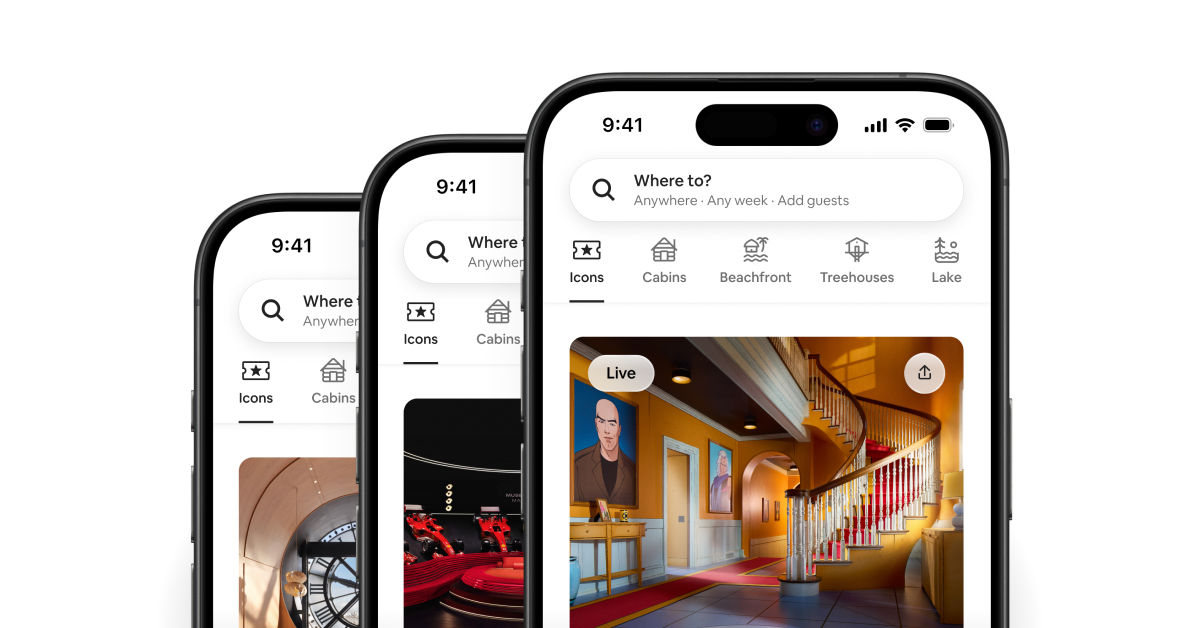
Icons turned celebrity, film, music, and cultural moments into limited stays and experiences. It looked like marketing, but the move put brand desire inside the marketplace inventory.
Reddit changed API pricing and Apollo could not survive it.
The business needed to capture platform value before IPO. The product consequence was that a loved third-party client and the ecosystem around it learned the partnership terms had changed.
Threads opened a door to the fediverse without giving up the house.
Meta expanded Threads sharing into decentralized social servers. The move signaled openness while keeping the core graph, product defaults, and mainstream UX inside Threads.
Video Call with Lily gave Max subscribers a way to practice conversation inside an existing habit loop. The important part was not AI in general. It was where the AI landed.
Netflix turned tolerated sharing into a paid rule.
Password sharing moved from informal behavior to an enforceable household model. The unpopular part was obvious. The product craft was making the new rule legible enough to survive anger.
Apple delayed Siri because the architecture could not carry the promise.
Personalized Siri was supposed to show Apple Intelligence inside the platform. Apple delayed it while reworking the architecture needed to meet the quality bar users associate with Apple.